Owner-Operator vs Company Driver: The Real Math
The gross numbers look better as an owner-operator. The net is more complicated. An honest owner-operator vs company driver comparison with real numbers.
By Rigbird Content Team · May 26, 2026 (updated July 25, 2026) · 9 min read

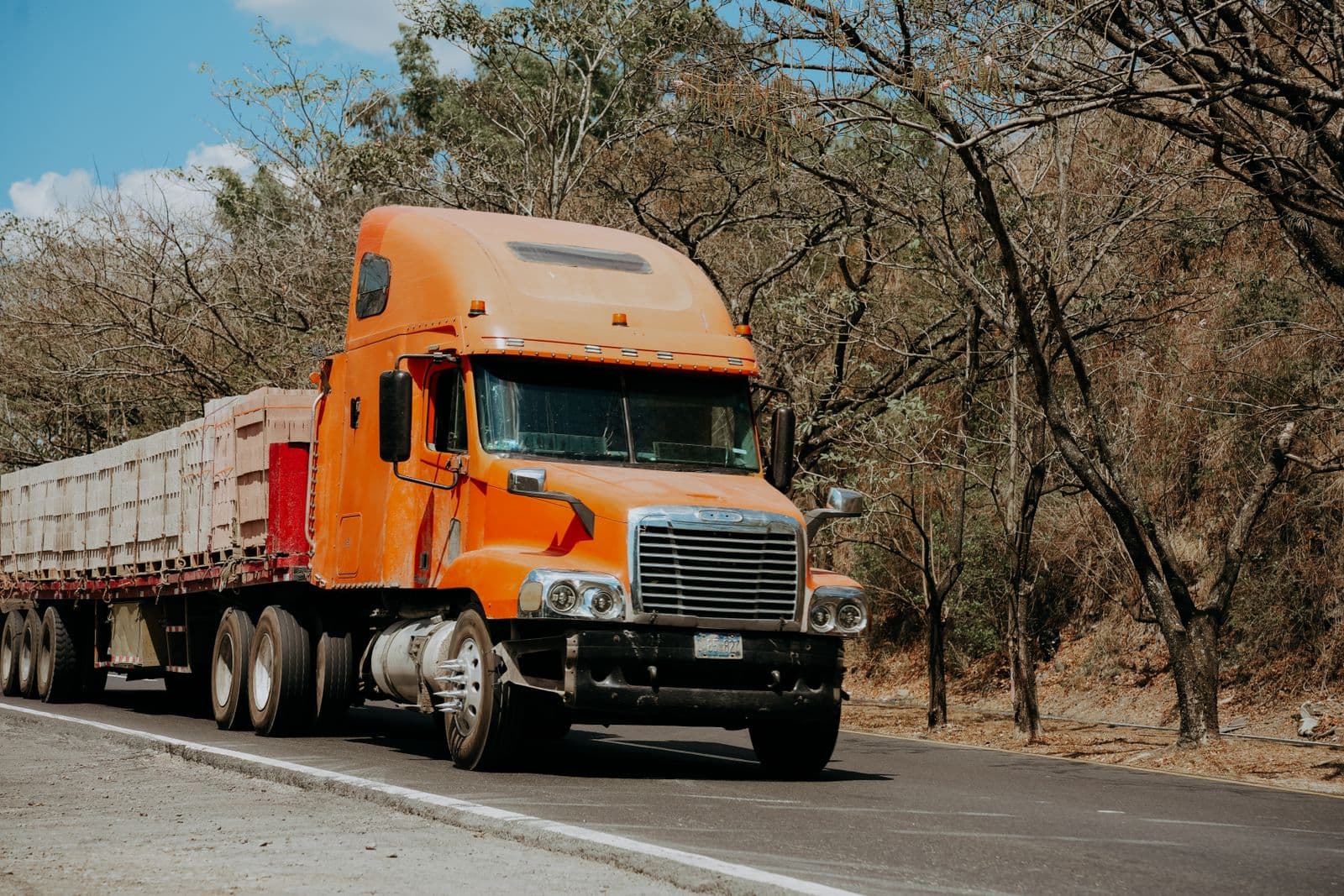
Photo by 女子 正真 on Pexels
Drivers switch from company to owner-operator every day expecting a big income jump. Some get it. Others spend a year learning that grossing $200,000 doesn't mean making $200,000. The math only works in your favor if you understand your costs down to the mile and run a tight operation. This breaks down both sides honestly. If you're weighing the jump seriously, our guide on how to become an owner-operator covers the practical steps once you've decided the numbers work for you.
Company driver: what you actually get
As a company driver, you're a W-2 employee. Your employer handles fuel, insurance, truck payments, maintenance, and dispatch. You show up, drive, and get paid. Typical company driver pay for OTR runs somewhere between $0.55 and $0.75 per mile, depending on the carrier, your experience, and freight type. Some carriers pay by salary or hourly. Top earners at the best carriers can clear $80,000 to $90,000 per year. See our truck driver pay per mile breakdown for how those cents-per-mile rates compare across experience levels and freight types.
- No capital investment in equipment
- No insurance premiums to pay directly
- No authority maintenance, IFTA filing, or UCR fees
- Employer pays half of payroll taxes (7.65% of wages)
- Predictable income with less administrative burden
- Limited control over routes, loads, and home time
- No upside from a strong freight market
Owner-operator: the gross looks bigger, then costs arrive
An owner-operator running their own authority might gross $180,000 to $250,000 per year depending on miles, equipment, and the market. That number sounds compelling. Then you subtract costs.
- Truck payment: $1,500 to $2,500 per month
- Fuel: $4,000 to $7,000+ per month depending on miles and diesel price
- Insurance (primary + cargo + physical damage): $700 to $1,800 per month
- Maintenance and repairs: $500 to $2,000+ per month
- Tires: $800 to $1,500 per month (prorated over their life)
- Permits, UCR, IRP, IFTA, BOC-3: $300 to $600 per month
- Load board, ELD, and dispatch software: $150 to $400 per month
- Accounting and taxes: $100 to $300 per month
- Total operating costs: roughly $8,000 to $16,000 per month
A realistic comparison
| Dimension | Owner-operator | Company driver |
|---|---|---|
| Typical gross pay | $180,000 to $250,000/year | $0.55 to $0.75/mile ($55,000 to $90,000/year) |
| Typical net take-home | $55,000 to $65,000 (efficient operators: $80,000 to $110,000) | $55,000 to $62,000 |
| Capital investment | Truck payment of $1,500 to $2,500/month | None |
| Insurance and permits | Paid directly, $700 to $1,800/month plus IRP, IFTA, UCR | Covered by employer |
| Payroll tax burden | Full 15.3% self-employment tax | Half (7.65%), employer pays the rest |
| Control over loads and routes | Full control, choose freight and lanes | Limited, dispatched by the carrier |
| Risk exposure | Bears breakdown, downturn, and claims risk directly | Insulated by the employer |
| Administrative load | Taxes, IFTA, permits, invoicing, dispatching | Minimal, mostly paperwork-free |
Say an owner-operator grosses $210,000 in a year. Total operating costs come to $132,000 (conservative, assuming a newer truck, good fuel economy, and minimal major repairs). Net before taxes: $78,000.
From that $78,000, they owe self-employment tax of 15.3% on net earnings (both the employee and employer halves of Social Security and Medicare, because there's no employer splitting the bill). On $78,000 that's roughly $11,900 in SE tax before income tax deductions. After SE tax and a reasonable income tax estimate, net take-home might land around $55,000 to $65,000 depending on deductions.
Compare that to a company driver at the same carrier making $75,000 gross. After the employee share of payroll taxes (7.65%) and federal income tax, take-home is around $55,000 to $62,000. The numbers aren't far apart, and the company driver has zero capital risk, no equipment headaches, and no quarterly IFTA filings.
Where owner-operators actually come out ahead
The math shifts in favor of an owner-operator when they run efficiently. Lower CPM, higher loaded mile percentage, strong freight rates, and minimal downtime are what push net earnings meaningfully above a company wage. An owner-operator who keeps their truck running close to 200,000 miles per year, controls deadhead well, and runs on good lanes can net $80,000 to $110,000. That's real upside over a company job.
Tax deductions also work in the owner-operator's favor. You can deduct truck depreciation (Section 179 allows immediate expensing of qualified property up to IRS limits, which change annually), fuel, maintenance, insurance, home office, and health insurance premiums. These deductions reduce taxable income significantly compared to a W-2 employee with the same gross.
The risks company math ignores
The owner-operator calculation assumes continuous operation. In reality: major repairs can cost $10,000 to $30,000 and sideline the truck for days or weeks. Freight downturns compress rates for months at a time. Insurance claims affect renewals. A serious breakdown while under load has cascading costs. Company drivers are insulated from all of this. Owner-operators carry it.
When owner-operator makes sense
- You've been driving at least two to three years and understand the industry
- You have a repair fund (at minimum $10,000) before you start
- You understand your cost per mile and can calculate load profitability
- You have strong relationships with brokers or a dedicated lane in place
- You're prepared to handle the administrative side: taxes, IFTA, permits, invoicing
When to stay company
- You need predictable income with no financial cushion
- You don't yet know your industry well enough to judge loads and brokers
- You're not comfortable with the administrative requirements of running a business
- The freight market is soft and margins are thin for small carriers
Rigbird's cost-per-mile calculator is free and takes two minutes. Run your actual numbers before deciding whether ownership pencils out for your situation.
Calculate my CPMFrequently asked questions
Does an owner-operator make more money than a company driver?
Often on paper, yes. Gross pay for owner-operators typically runs $180,000 to $250,000 a year versus $55,000 to $90,000 for a company driver. After operating costs and self-employment tax, net take-home often lands close to what a company driver keeps, unless the owner-operator runs an efficient operation with strong lanes and low deadhead.
Is being an owner-operator riskier than driving for a company?
Yes. Owner-operators carry the risk of major repairs, freight downturns, and insurance claims directly. A company driver is insulated from all of that because the carrier owns the truck and absorbs the losses. That risk is the trade-off for a higher earning ceiling and control over loads and routes.
Can you switch back and forth between owner-operator and company driver?
Yes, plenty of drivers do. Some run their own authority for a few years, then go back to a company job during a soft freight market or when they want a break from the administrative load. Others do the opposite once they have built savings and industry experience. Neither path is permanent.
How much does it cost to get started as an owner-operator?
Beyond financing or buying a truck, budget for insurance, permits (IRP, IFTA, UCR, BOC-3), and a repair fund of at least $10,000 before you haul your first load. Many new owner-operators underestimate the repair fund and get caught out by the first major breakdown.
What is the biggest mistake drivers make when comparing the two paths?
Comparing gross pay instead of net. An owner-operator's $210,000 gross can shrink to $55,000 to $65,000 after operating costs, self-employment tax, and income tax. Always run the full cost-per-mile math before assuming ownership pays better.
The Rigbird team writes from direct conversations with owner-operators and small fleet dispatchers using the product every day. Guides are reviewed for accuracy against current FMCSA and IFTA source material before publishing.