How to Calculate Your Trucking Cost Per Mile
Cost per mile is the one number every owner-operator must know cold. How to calculate it, what to include, and how to avoid hauling loads at a loss.
By Rigbird Content Team · June 25, 2026 (updated July 25, 2026) · 9 min read

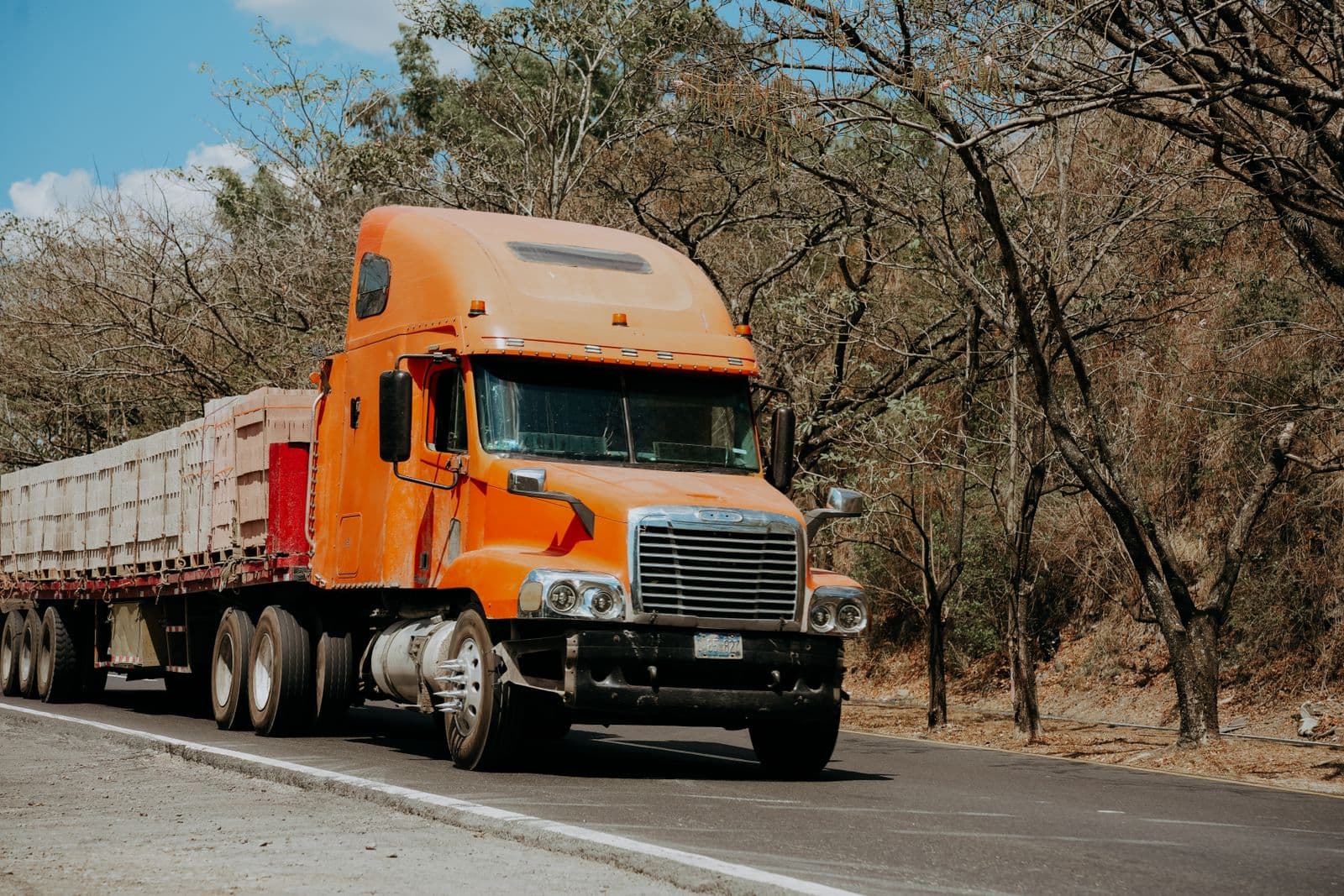
Photo by SHVETS production on Pexels
If you don't know your cost per mile, you can't tell a good load from a bad one. You might be grossing $2.10 a mile and think things are going well, only to find out your true cost is $1.95 and you've been working 60-hour weeks for pennies. Cost per mile (CPM) is the floor below which you cannot haul and make money. Every rate negotiation, every load decision, starts here.
Fixed costs vs. variable costs
Split your costs into two buckets. Fixed costs hit you every month whether you run 8,000 miles or 14,000. Variable costs scale with the miles you turn.
Fixed costs (monthly)
- Truck payment or lease
- Primary liability and cargo insurance
- Bobtail and non-trucking liability (if leased on)
- IRP apportioned plates, prorated monthly
- BOC-3 process agent fee
- UCR registration, prorated monthly
- Trailer payment or rental
- Load board and dispatch subscriptions
- ELD and phone
Variable costs (per mile or per month, scaled to miles)
- Diesel fuel (largest single variable cost for most carriers)
- Reefer fuel if you pull temperature-controlled freight
- Tires, prorated over expected life (100,000 to 150,000 miles per drive set)
- Preventive maintenance: oil, filters, DEF, annual DOT inspection
- Unplanned repairs: budget a monthly reserve, usually $500 to $1,500 for trucks over five years old
- Tolls, averaged by route
- Lumpers if you end up covering them
The formula
Total CPM = (Monthly fixed costs + Monthly variable costs) divided by total miles driven that month. Total miles means all miles, loaded and empty. Your deadhead still burns fuel and wears your truck.
A worked example
Say you ran 10,000 miles in a month, 7,500 of them loaded. Diesel averaged $3.85 and your truck gets about 6.5 miles per gallon.
- Truck payment: $1,800
- Insurance (primary + bobtail): $1,100
- IRP + UCR + BOC-3 prorated: $180
- ELD + phone + load board: $150
- Fixed total: $3,230
- Fuel: 10,000 miles / 6.5 mpg x $3.85 = $5,923
- Tires reserve: $1,200
- Maintenance + repairs: $800
- Tolls: $120
- Variable total: $8,043
- Grand total: $11,273
- CPM: $11,273 / 10,000 miles = $1.13 per mile all-in
| Cost category | Monthly amount |
|---|---|
| Truck payment | $1,800 |
| Insurance (primary + bobtail) | $1,100 |
| IRP + UCR + BOC-3 (prorated) | $180 |
| ELD + phone + load board | $150 |
| Fixed total | $3,230 |
| Fuel | $5,923 |
| Tires reserve | $1,200 |
| Maintenance + repairs | $800 |
| Tolls | $120 |
| Variable total | $8,043 |
| Grand total | $11,273 |
| Cost per mile (all miles) | $1.13 |
| Cost per mile (loaded miles only) | $1.50 |
Now here is the part people miss. You only got paid for the 7,500 loaded miles. So your effective cost against revenue miles is $11,273 / 7,500 = $1.50 per loaded mile. A load at $1.80 per loaded mile gives you $0.30 to pay yourself, cover taxes, and save something, which is the kind of margin you should be working toward when you set your target rate per mile. A load at $1.40 per loaded mile is losing money.
The two mistakes that sink owner-operators
First mistake: counting only fuel. Fuel is real, painful, and swipes your card every 600 miles. But your insurance alone might be over $1,000 a month. Leave that out and your CPM math is fiction.
Second mistake: forgetting deadhead miles in the denominator. A load paying $2.50 per loaded mile sounds great until you add 350 miles of empty running to get to the shipper. Spread your costs over 1,350 total miles and recalculate. The picture changes.
How often to update your CPM
Monthly is practical. Diesel prices move. Your repair costs are lumpy. If you take a week off or run light, fixed costs get spread over fewer miles and your CPM climbs. Run the numbers monthly and your floor rate stays accurate.
What a workable margin looks like
Most owner-operators with a healthy operation net 15 to 35 cents per loaded mile above CPM before owner compensation, roughly in line with what counts as a good rate per mile in 2026. If your CPM is $1.55 and you're consistently hauling at $1.60, you're not running a business, you're running a very expensive hobby. The difference between surviving and building something in this industry almost always comes down to knowing this number precisely and refusing to haul below it.
Rigbird's free cost-per-mile calculator walks through every line item, fixed and variable, and gives you a number you can actually haul by.
Calculate my CPMFrequently asked questions
What counts as a fixed cost versus a variable cost in trucking?
Fixed costs are the ones you owe every month regardless of miles run, things like your truck payment, insurance, and IRP, UCR, and BOC-3 fees. Variable costs scale with the miles you drive, mainly fuel, tires, maintenance, and tolls. Splitting the two out is what lets you see how a slow week changes your true cost per mile.
How often should I recalculate my cost per mile?
Monthly is the practical minimum. Diesel prices move, repair costs come in lumps, and any week you run light spreads your fixed costs over fewer miles. Recalculating monthly keeps your floor rate accurate instead of stale.
What is a typical cost per mile for an owner-operator?
Most owner-operators land somewhere between $1.30 and $1.75 all-in per mile, though the exact figure depends heavily on truck age, insurance costs, and how much deadhead you run. There is no single universal number, which is exactly why calculating your own is non-negotiable.
Should I calculate cost per mile using total miles or loaded miles?
Start with total miles, loaded and empty, since every mile costs you fuel and wear whether or not it is paid. Then also work out your cost per loaded mile, since that is the figure you compare directly against a load's rate confirmation.
Does cost per mile include a paycheck for the owner-operator?
No. CPM as calculated here covers only true operating costs. Owner compensation and profit come from the margin between your CPM and what you actually get paid per mile, which is why most healthy operations aim for 15 to 35 cents per loaded mile above their CPM.
The Rigbird team writes from direct conversations with owner-operators and small fleet dispatchers using the product every day. Guides are reviewed for accuracy against current FMCSA and IFTA source material before publishing.